


South Florida heat isn’t just uncomfortable—it changes how people drive and how cars behave. High temperatures can impair focus, strain vehicle components, and turn routine trips into emergencies. This guide explains the main heat-related dangers on our roads, what to do after a crash, and how to protect your rights if someone else’s negligence caused your injuries.
Researchers have found that fatal crash rates are about 9.5% higher when temperatures exceed 80°F compared to milder days. In South Florida (where summer highs routinely hit the 90s and pavement temperatures soar even higher) these dangers are magnified.
This guide will explain:
- How heat affects drivers and vehicles
- Why summer accident risks are unique in South Florida
- What to do immediately after a heat-related crash
- How to protect your rights and pursue a lawsuit if the accident wasn’t your fault
How Heat Affects Driver Performance
Safe driving depends on alertness and fast reactions. Extreme heat chips away at both. Understanding these effects helps you recognize the warning signs in yourself and other drivers.
Dehydration & Fatigue
Heat speeds up dehydration, which reduces concentration, slows reaction times, and can even cause dizziness or confusion. According to the CDC, dehydration of just 2% of body weight can impact cognitive performance and decision-making — both critical for safe driving.
Heat-Induced Irritability & Aggression
Studies show high temperatures are linked to increased aggressive driving behaviors, such as tailgating, speeding, and unsafe lane changes. This can lead to more collisions, especially in congested South Florida traffic.
Slower Reflexes
Heat stress affects the nervous system, making reflexes slower. In fast-moving traffic on I-95 or the Palmetto Expressway, even a fraction of a second delay can mean the difference between avoiding a collision and causing one.
How Heat Damages Your Vehicle and Creates Accident Hazards
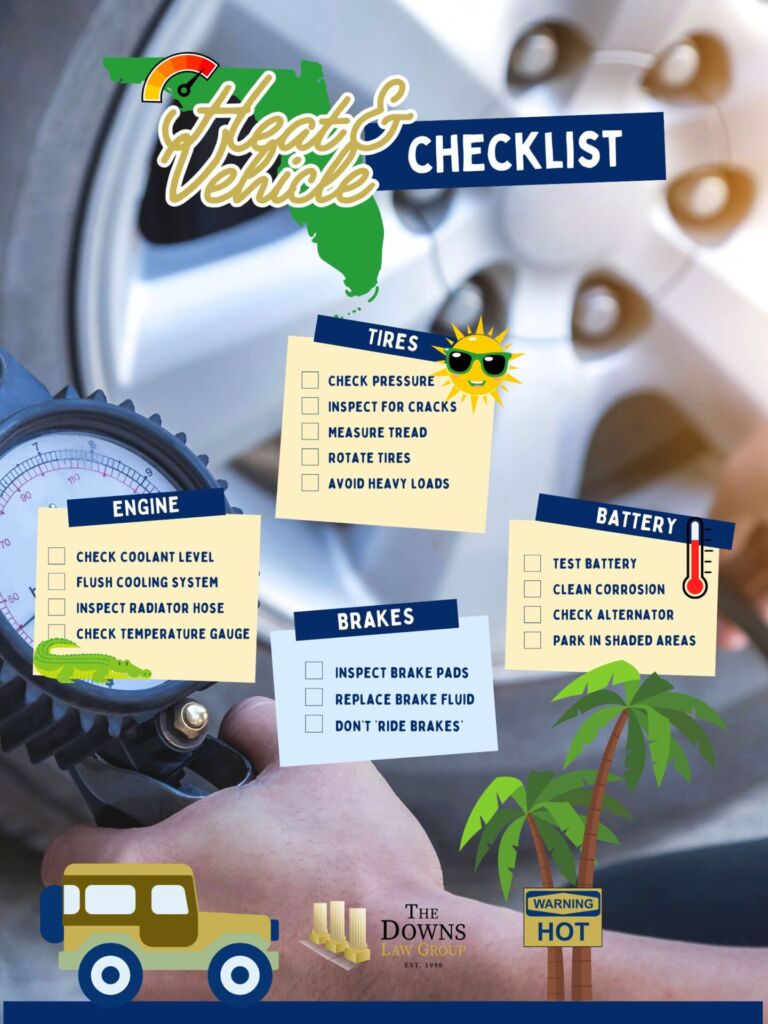
Tires, brakes, batteries, and cooling systems all have smaller safety margins when outdoor temperature rises to extreme levels. If you don’t prepare, these failures can happen without warning and lead to dangerous accidents.
Tire Blowouts
Hot weather causes air inside tires to expand, increasing internal pressure. Overinflated or worn tires are at higher risk of exploding, especially when in contact with scorching asphalt (which can exceed 140°F in summer). Blowouts can cause drivers to lose control, leading to high-speed crashes.
Prevention Tips:
- Check your tire pressure at least once a month and before road trips.
- Use the pressure recommended in your owner’s manual or on the doorjamb sticker — not the number printed on the tire’s sidewall.
- Inspect for cracks, bulges, or low tread. Florida’s heat accelerates dry rot in rubber.
- Rotate tires every 5,000–7,500 miles to promote even wear.
- Avoid overloading your vehicle, as extra weight increases tire stress.
Engine Overheating
South Florida heat strains engines, especially in older cars or those with cooling system issues. Overheated engines can stall in dangerous locations, like busy intersections or highway lanes, creating a sudden hazard for other drivers.
Prevention Tips:
- Check coolant levels monthly and top off with the correct type for your vehicle.
- Have your cooling system flushed and refilled every 2–3 years or per manufacturer’s guidelines.
- Inspect radiator hoses for cracks or leaks — hot weather makes them brittle.
- Watch the temperature gauge; if it climbs into the red, turn off the AC, turn on the heater, and pull over safely to let the engine cool.
- Never open the radiator cap while the engine is hot; you may risk severe burns.
Brake Fade
Brakes work by converting motion into heat. In high temperatures, especially during stop-and-go driving or descending steep bridges, brake components can overheat. When brake pads or fluid can’t dissipate the heat, you lose stopping power, known as “brake fade.” Urban driving and frequent bridge traffic on the Julia Tuttle or MacArthur Causeway create conditions for repeated, high-heat braking.
Prevention Tips:
- Have brakes inspected at least twice a year.
- Replace brake fluid every 2 years to avoid moisture buildup, which boils at lower temperatures.
- Downshift instead of “riding the brakes” on long descents or when towing.
- Use high-quality brake pads rated for heavy use and high temps.
- Be alert for warning signs like a soft pedal, burning smell, or squealing.
Battery Failure
Heat accelerates battery fluid evaporation, shortening battery life and increasing the risk of sudden failure, which can leave drivers stranded in unsafe areas.
Frequent short trips and extreme heat shorten battery life here. While cold climates see more winter failures, hot climates like Florida are even harder on batteries overall.
Prevention Tips:
- Have your battery tested every 6 months once it’s more than 2 years old.
- Keep terminals clean and free from corrosion.
- Ensure your charging system is functioning properly; a failing alternator can overheat the battery.
- Park in shaded or covered areas when possible to reduce heat exposure.
- Replace your battery every 3–5 years (often sooner in South Florida).
The Deadly Danger Inside Your Car: Interior Heat Buildup
Even if you’re parked, extreme heat poses a life-threatening risk for passengers and pets.
- On a 90°F day, the inside of a parked car can reach 110°F in just 10 minutes and 150°F within an hour.
- Florida ranks second in the nation for child hot-car deaths, with 113 fatalities from 1998–2024 according to Palm Beach County Fire Rescue (PBCFR).
This isn’t just about safety when parked — in extreme heat, a broken AC unit during a traffic jam can also cause passengers to overheat, especially vulnerable groups like children, the elderly, and those with health conditions.
Why South Florida Faces Unique Heat-Related Accident Risks
Our region combines high heat with heavy tourism, dense highways, and hurricane season. That cocktail elevates risk compared with many other places.
Year-Round Heat = Faster Wear
Unlike other states, South Florida’s “heat season” stretches most of the year, meaning vehicle wear and tear happens faster. Routine maintenance should be on a slightly shorter cadence here than in cooler states.
Tourist Traffic
From snowbirds to spring breakers, South Florida’s roads are filled with drivers unfamiliar with local roads and weather conditions. Add heat stress and congested corridors (I-95, US-1, Dolphin/Palmetto), and crash risk climbs.
Hurricane Season Hazards
Hurricane season overlaps with peak heat months. Road debris, sudden downpours, and evacuation traffic all combine with high temps to create dangerous driving conditions. Plan routes, check conditions, and avoid discretionary trips during advisories.
Congested Urban Roads
Highways like I-95, US-1, and the Dolphin Expressway often experience heavy stop-and-go traffic, offering little to no shade for stopped cars, which can overheat both engines and tempers.
What to Do Immediately After a Heat-Related Car Accident
If you’ve been involved in a crash that may have been caused by heat-related factors — whether vehicle failure or driver impairment — take these steps:
- Check for Injuries & Call 911 — Get evaluated—some injuries and heat illnesses don’t show immediately.
- Move to a Safe Location — If possible, get off the road to avoid secondary accidents.
- Document Everything
- Take photos of the damage, tire condition, skid marks, and the surrounding area.
- Capture dashboard temperature readings or weather app screenshots.
- Get Witness Statements — Record contact info and any details they observed.
- Preserve Vehicle Evidence — If a blowout or mechanical failure occurred, do not repair or discard the damaged parts before they’re inspected.
- See a doctor within 14 days. Did you know Florida’s PIP benefits generally require treatment within 14 days to preserve coverage?
Pursuing a Lawsuit After a Heat-Related Car Accident
In Florida, heat may be a factor, but negligence is often the cause, like failing to maintain safe tires or driving aggressively in extreme conditions. You may be entitled to compensation.
Potential Negligence Claims
- Unsafe Driving in Hot Conditions: Speeding, tailgating, or failing to account for reduced vehicle performance.
- Negligent Vehicle Maintenance: Ignoring tire checks, cooling system repairs, or brake maintenance.
- Defective Parts: Tires, brakes, or cooling components that fail under foreseeable heat loads may trigger product liability claims.
Damages You May Recover
- Medical bills (current and future)
- Lost income
- Pain and suffering
- Vehicle repair or replacement costs
- & More; consult with a Top South Florida Car Accident Attorney at The Downs Law Group!
How The Downs Law Group Can Help
At The Downs Law Group, our legal team understands both Florida personal injury law and the unique challenges of heat-related car accidents. We work with accident reconstruction experts, vehicle engineers, and medical professionals to uncover the real cause of your crash and fight for maximum compensation.
Call us today for a free consultation if you were injured in a South Florida car accident that wasn’t your fault.
Learn more about potential personal injury lawsuits.